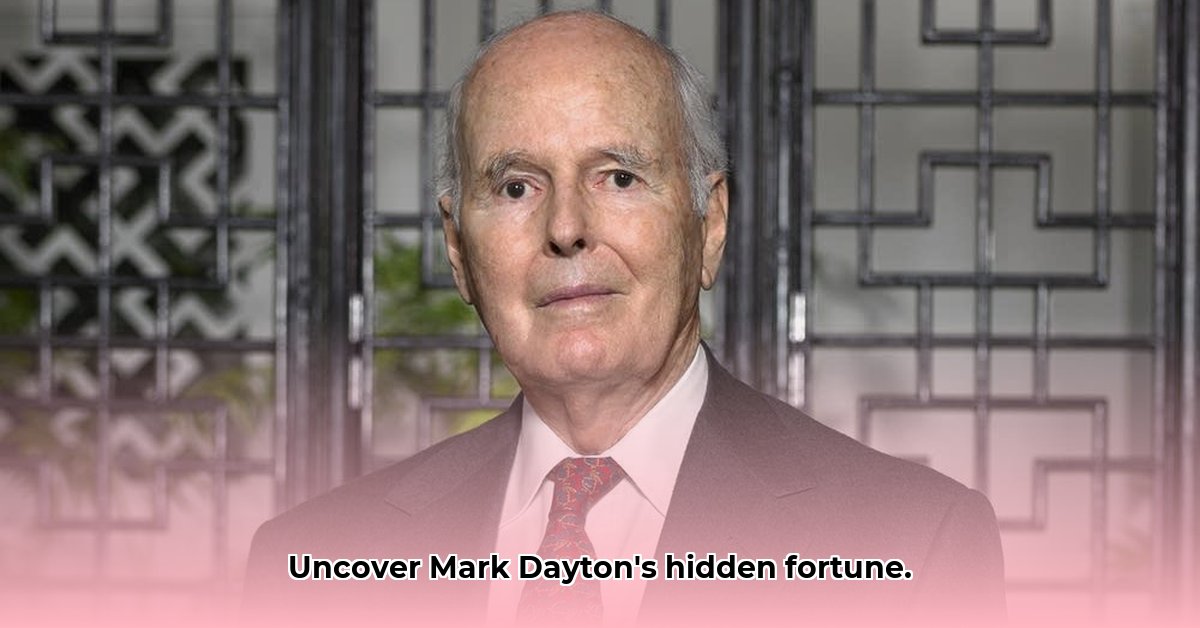
The Dayton Fortune and the Minnesota Governorship
Mark Dayton's eight years as Minnesota's governor (2011-2019) present a compelling case study in the interplay of inherited wealth, progressive politics, and the challenges of governing a deeply divided state. While the precise figure of his net worth remains elusive – a common characteristic of high-net-worth individuals – its influence on his political trajectory is undeniable. This essay explores how his considerable fortune shaped his political choices, his governing style, and ultimately, his legacy. Did his wealth empower him to act independently, or did it paradoxically create a disconnect from the average Minnesotan? The answer, as we shall see, is nuanced and complex. For more on his finances, see Dayton's net worth.
The Inheritance and its Influence
Mark Dayton inherited a significant fortune, a product of his family's longstanding success with Dayton's Department Store. This financial independence allowed him to self-fund his campaigns, a luxury rarely afforded to most politicians. This freedom from reliance on traditional campaign donors arguably afforded him greater autonomy in his policy decisions. He wasn't beholden to special interests or powerful lobbies, a fact that certainly influenced his ability to champion progressive causes, even when unpopular. However, this independence also raised concerns about his relatability to the everyday Minnesotan. Could his privileged background cloud his understanding of the financial pressures facing working-class families? This crucial question underpins much of the analysis surrounding his tenure.
Progressive Politics and Political Battles
Dayton’s political career wasn't solely defined by his wealth. Long before entering the gubernatorial race, he was a vocal advocate for progressive causes, often challenging powerful corporate entities – including companies connected to his family’s business legacy – demonstrating a commitment to his principles over personal gain. This inherent tension between inherited privilege and a fervent belief in social justice informed his political ideology and shaped the controversies that characterized his time in office. His gubernatorial victories, often achieved with narrow margins, attest to his ability to connect with voters, transcending the potential perception of elitism that often accompanies considerable wealth. His legislative battles, particularly those focused on the state budget, highlighted the sharp political divisions within Minnesota and his persistent commitment to enacting progressive policies.
Governing in a Divided State: Achievements and Controversies
Dayton's governorship was a complex tapestry of successes and setbacks. He successfully balanced the state budget, a feat often touted as a major accomplishment. His administration also witnessed the legalization of same-sex marriage in Minnesota, a triumph that cemented his legacy as a champion of LGBTQ+ rights. However, the implementation of MNsure, the state's health insurance exchange, and MNLARS, a massive vehicle registration system, were plagued by significant technical and operational issues. These widely-criticized programs illustrate that even a governor with substantial resources and ostensibly independent political action can face challenges in effective governance. How did his wealth influence these successes and failures? It's not a simple equation. His financial security arguably allowed for bolder policy ambitions, but also potentially inhibited the responsiveness necessary to mitigate the challenges of complex program implementation.
Dayton's Legacy: Beyond the Net Worth
The true measure of Mark Dayton's legacy extends far beyond the numerical value of his net worth. His story is one of inherited privilege utilized – in ways both successful and controversial – to champion progressive causes and govern a state often divided along partisan and socioeconomic lines. His time as governor showcased both the potential and the limitations inherent in the intersection of personal wealth and public service. The ongoing debate about the implications of his financial background on his political career underscores the enduring complexity of his legacy and its continued relevance in understanding the dynamics of modern American politics. A thorough understanding calls for a holistic examination, leaving the simple quantification of his wealth as only one piece of a far larger and more intricate puzzle.